What Changed in the CFA 2027 Curriculum?
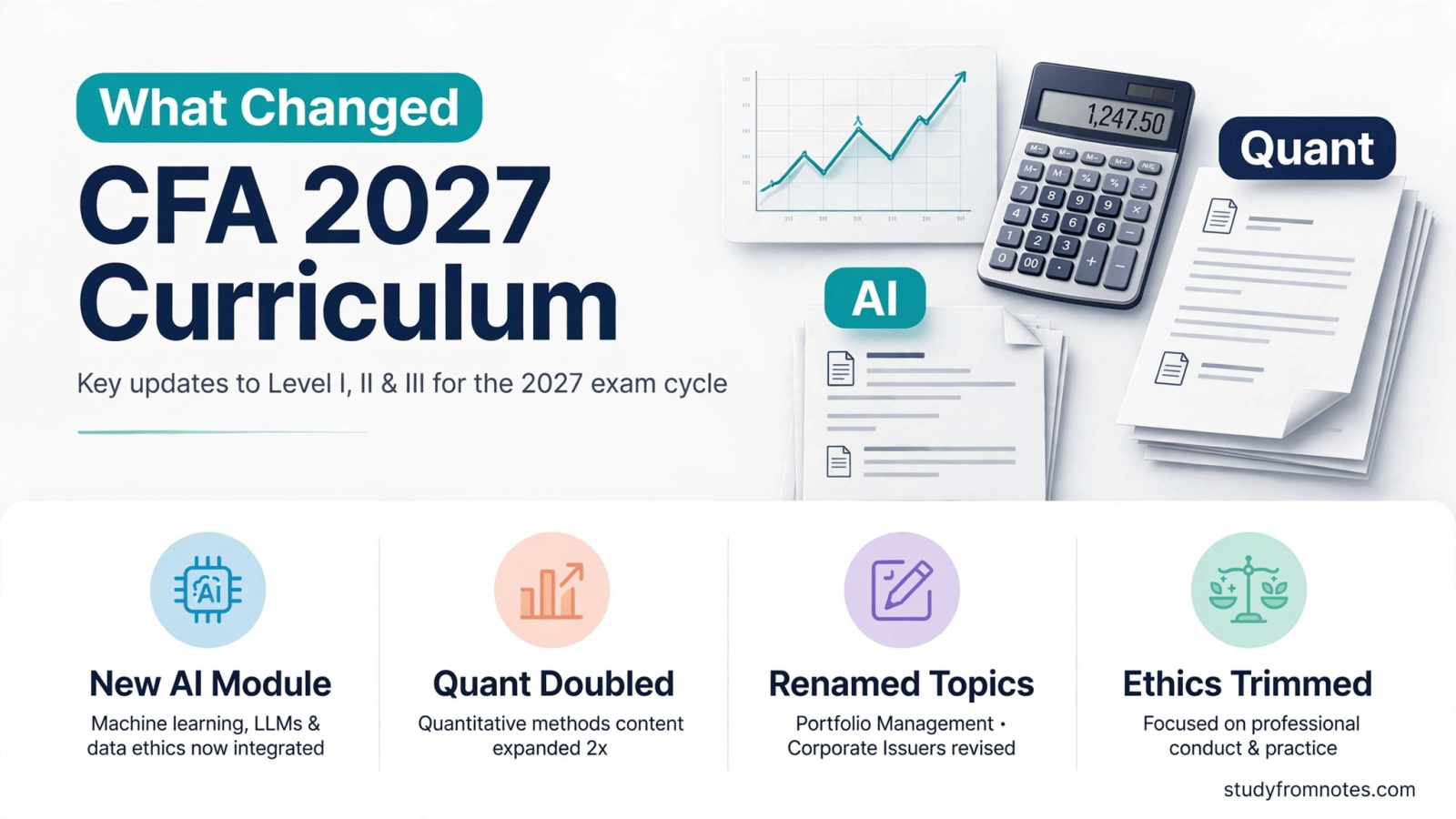
The CFA 2027 curriculum substantially overhauls the Level 1 syllabus for exams from February 2027: several topic areas have been renamed, a new financial data science and AI module has been added, Quantitative Methods now carries roughly double its previous weight, and Ethics has been restructured with a reduced weight but expanded module count.
If you are sitting the CFA Level 1 in 2027, study guides written for the 2026 syllabus are now partly out of date. This guide maps exactly what moved, what is new, and how to rebuild your study plan around the changes.
Table of Contents
- CFA 2027 Curriculum: The Renamed Topic Areas
- The New Data Science and AI Module
- Quantitative Methods: Now Worth Double
- Ethics: Restructured, Not Reduced
- CFA 2027 Curriculum Study Plan: What This Means for You
- Common Mistakes Candidates Make After a Curriculum Change
- Frequently Asked Questions
CFA 2027 Curriculum: The Renamed Topic Areas
Several readings have been reorganized under new names for 2027. The most significant renames reported by prep providers include Corporate Finance, Equities, and Portfolio Construction, each absorbing and restructuring material that previously sat under older headings.
Renames matter more than they look. When CFA Institute restructures a topic area, the learning outcome statements change with it, and exam questions follow the new statements. Do not assume a renamed reading tests the same things the old one did. Work from the 2027 learning outcome statements directly, which CFA Institute publishes with each curriculum release.
The New Data Science and AI Module
The headline addition for 2027 is a dedicated module covering financial data science, artificial intelligence, and large language models as applied to investment analysis. This is the first time the CFA curriculum treats AI as examinable content rather than background context.
For most candidates this is unfamiliar territory. The efficient approach: learn the concepts at the level the learning outcomes demand (definitions, use cases, limitations, and ethical considerations of AI in finance) rather than going deep into technical implementation. You are training to evaluate AI tools as an analyst, not to build them as an engineer.
Quantitative Methods: Now Worth Double
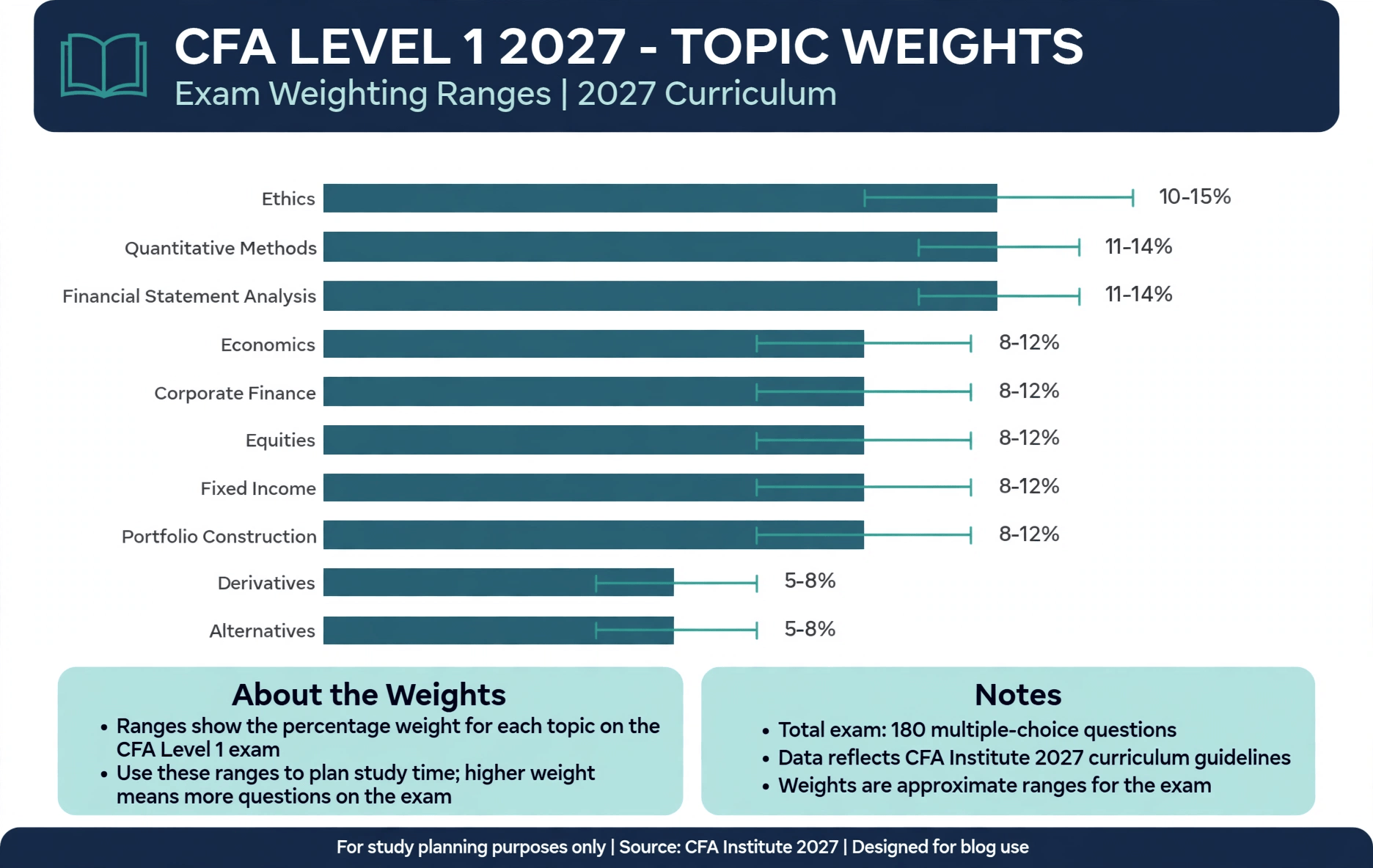
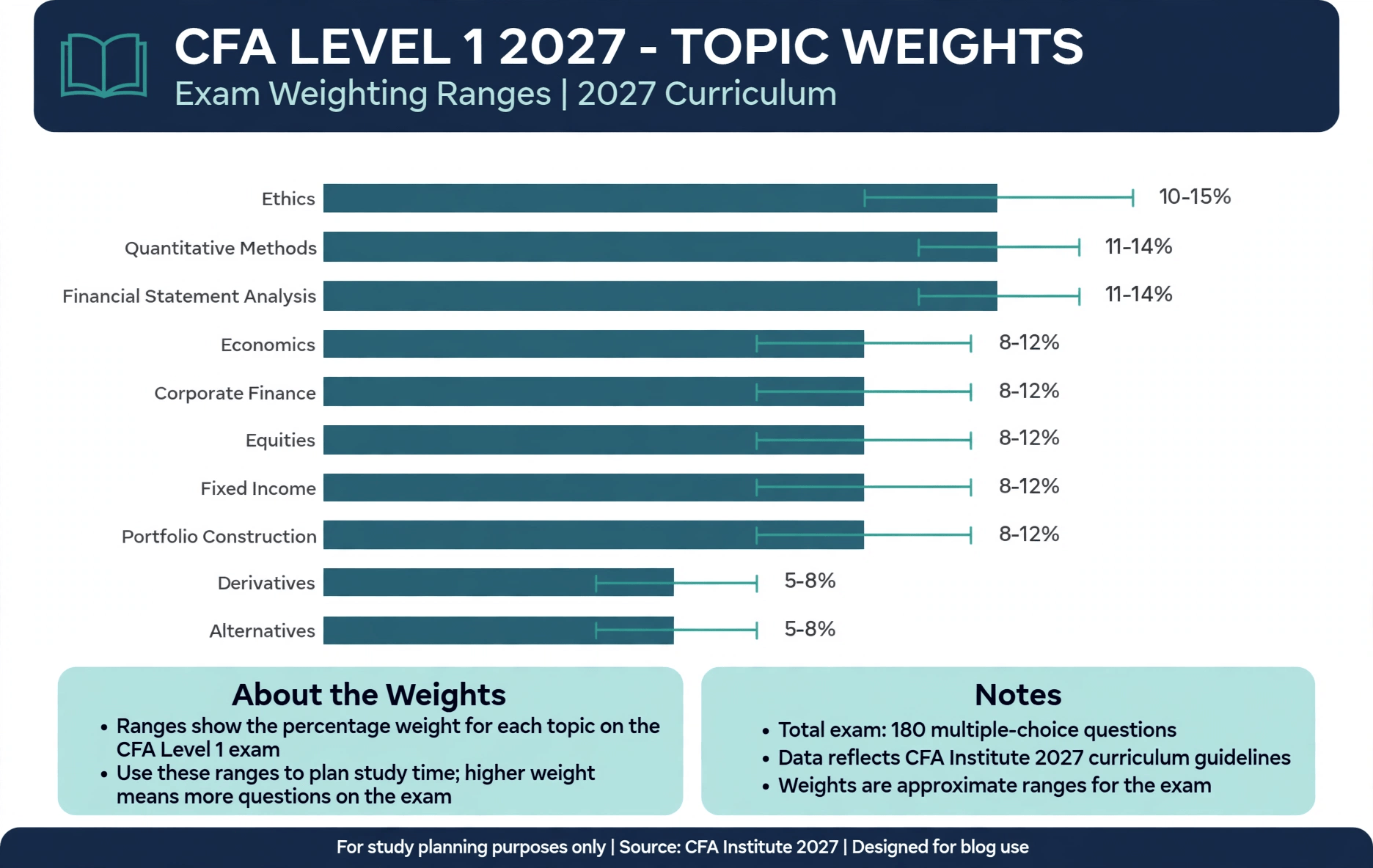
Quantitative Methods rises to an 11 to 14 percent exam weight for 2027, roughly double its previous share. This is the single biggest weighting change in the overhaul, and it reshapes the economics of your study schedule.
Time reallocation rule: whatever you planned to spend on Quant under the old curriculum, plan to spend meaningfully more now. Quant rewards structured practice over reading, so convert the extra hours into problem sets, not highlighters. Topic areas that feed into Quant-heavy questions (regression, time series, probability) deserve the same treatment.
Ethics: Restructured, Not Reduced
Ethics undergoes the most misunderstood change in the 2027 curriculum. Its exam weight drops from 15-20% to 10-15%, but the content actually expands: Level 1 grows from 5 to 10 learning modules, with each of the Standards I-VII now getting a dedicated guidance module. CFA Institute is restructuring Ethics for clarity, not cutting it.
What this means for you: do not mistake the lower weight for lower importance. Ethics remains a core topic, and the restructured modules mean you must learn the Standards in their new organization. Study Ethics from 2027-specific materials; the old 5-module structure will not match the new exam.
CFA 2027 Curriculum Study Plan: What This Means for You
Step 1: Download the 2027 learning outcome statements. Get them from CFA Institute, not from a prep provider summary. Your entire plan should trace back to the official document.
Step 2: Rebuild your topic weights. Increase Quantitative Methods to match its new 11 to 14 percent share. Add dedicated blocks for the data science and AI module. Update your Ethics study to the new 10-module structure.
Step 3: Retire 2026 materials for changed readings. For renamed topics and the new AI module, use only 2027-specific materials. Old question banks will test old learning outcomes.
Step 4: Front-load the unfamiliar. Start with the AI module and the expanded Quant material in your first month, when your energy is highest. Familiar topics can fill later weeks.
Step 5: Take a 2027-specific mock exam. Generic mocks built on the old curriculum will mislead you about your readiness. Confirm your mock matches the 2027 topic weights before trusting its score.
Map your weeks with our free study timetable generator, and use these note-taking methods to condense each reading into reviewable notes.
Common Mistakes Candidates Make After a Curriculum Change
- Studying from last year’s notes. Borrowed 2026 notes will be wrong on renamed readings and silent on the AI module.
- Underweighting Quant. Doubling the weight without doubling the study time is the most common self-inflicted wound of this curriculum change.
- Treating the AI module as optional. New modules are disproportionately tested in their first year because the Institute wants to signal their importance.
- Trusting old mocks. A mock built for the 2026 weights gives you a false sense of security on exactly the topics that changed.
Frequently Asked Questions
When do the 2027 curriculum changes take effect?
From the February 2027 exam administration onward, according to prep provider reporting on the CFA Institute release.
Do I need new study materials?
For changed readings, yes. Materials written for the 2026 curriculum will not cover the new AI module or the restructured topic areas accurately.
Is Ethics still important?
Yes. Its weight is reduced but its content expanded to 10 modules. Study it from 2027-specific materials.
How much study time does CFA Level 1 need?
CFA Institute has historically reported successful candidates averaging around 300 hours. With the expanded Quant and new AI content, budget toward the upper end of that range for 2027.
Study Smarter for 2027
Curriculum changes reward candidates who adapt fastest. Build your schedule around the new weights with our study timetable generator, and lock in each reading with spaced repetition so the new material survives until exam day.

Lauren Brooks is a finance professional writing on professional exams, study strategies, and finance careers.
![ACCA Qualification Explained: Exams, Pass Rates and How to Pass [2026 Guide]](https://i0.wp.com/www.studyfromnotes.com/wp-content/uploads/2026/10/acca-qualification-guide-featured.webp?resize=720%2C480&ssl=1)
Leave a Reply