CFA Industry and Company Analysis Notes: Five Forces, Life Cycle and Exam Traps [Level 1]
CFA industry analysis judges whether an industry can earn strong profits and whether one company can beat its peers. This Level 1…
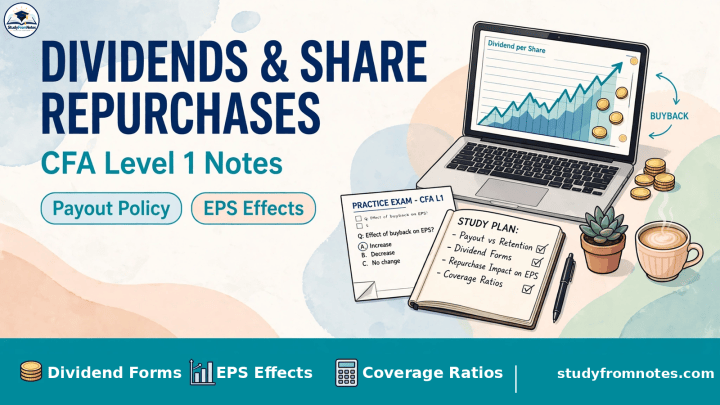
Dividends or buybacks? This CFA Level 1 note explains dividend forms, payout theories, repurchase methods and the EPS and book value arithmetic,…
Monetary policy is what a central bank does with rates and reserves. Fiscal policy is what a government does with spending and…
CFA equity market structure covers the market type that sets who quotes prices, the order type that controls how a trade fills,…
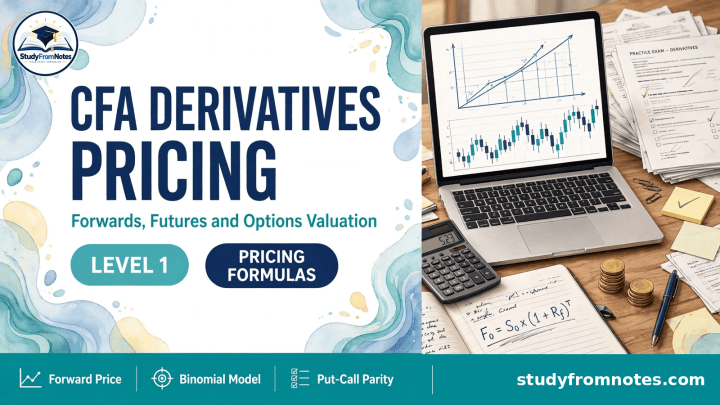
CFA derivatives pricing covers four tools: the forward price from cost of carry, the futures price from daily settlement, the one period…
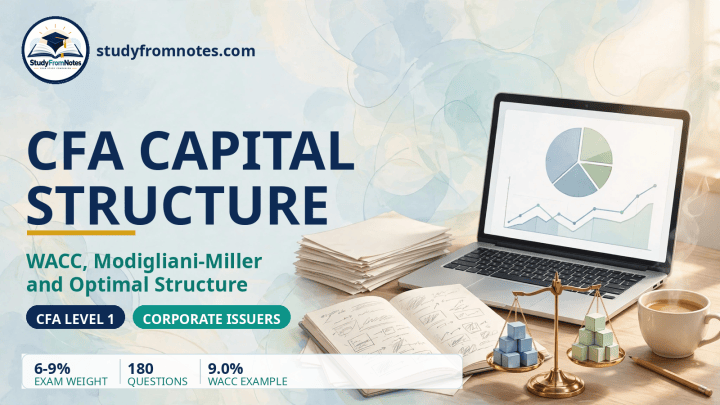
These CFA capital structure notes cover the WACC, the Modigliani-Miller propositions, trade-off and pecking order theories, and optimal and target capital structures.…
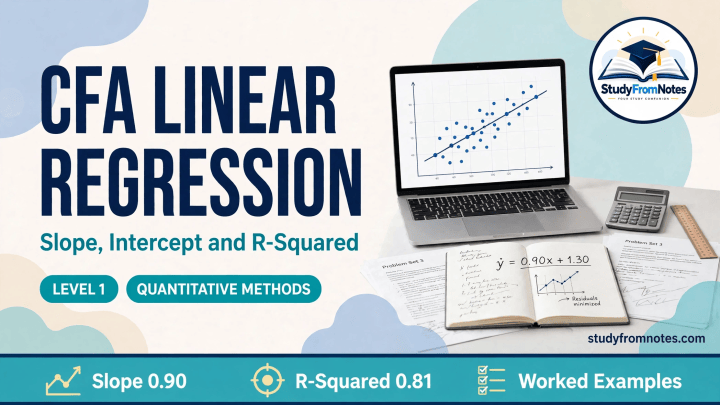
CFA linear regression fits a line to two variables so one can predict the other. The slope shows the change in the…
CFA probability distributions describe how likely each outcome is. Probability rules combine chances, the binomial and normal distributions model common outcomes, and…
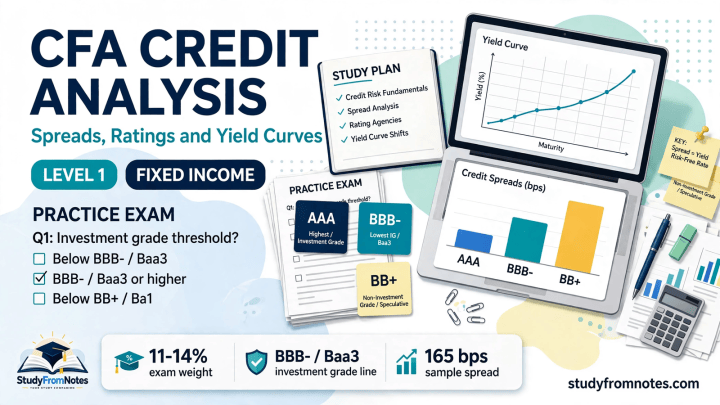
CFA credit analysis judges whether a borrower can and will repay its debt. Ratings sort issuers from AAA to default, spreads price…
The CFA Level 1 November 2026 exam window runs from 11 to 17 November 2026, and thousands of candidates sit their exam…